
Jan. 28 2026 | Miscellaneous | Sargents Equipment
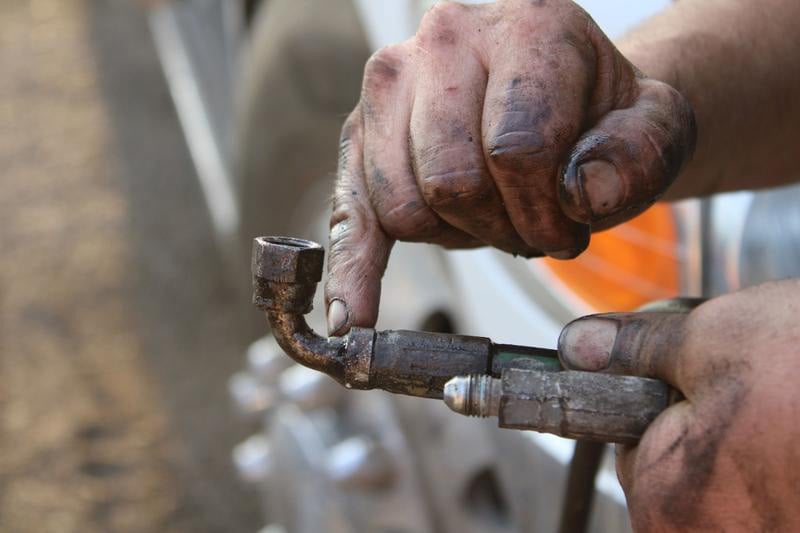
Hydraulic hoses fail most often due to abrasion, excessive heat or pressure, poor fitting installation, aging rubber, fluid contamination, or low-quality assemblies. Using high-quality hose and fittings, performing regular inspections, and following a preventative maintenance plan can stop most failures before they happen. And when a hose does burst, Sargent’s Equipment’s 24/7 mobile hose service gets your machines running fast.
At Sargent’s Equipment, we see hose failures every day across industrial plants, construction sites, recycling yards, demolition projects, agricultural operations, and other equipment-intensive industries. Understanding why hoses fail is the first step to keeping your machines productive and knowing who to call when they don’t.
Hydraulic hoses operate in rugged environments. They can rub against metal edges, clamps, other hoses, or even moving parts during machine cycles. Over time, that friction wears through the outer layer and weakens the reinforcement beneath.
Yes, excessive temperature or pressure is one of the top hidden causes of premature hose failure.
Every hydraulic hose has a rated temperature and pressure range. When the system runs hotter than designed, or when pressure spikes occur, the inner tube begins to harden, crack, blister, or delaminate.
If a hose seems to burst “out of nowhere,” inspect pressure relief valves, system filters, and cooling components. Failures are rarely random, and often tie back to heat or pressure management.
Absolutely.
Sometimes the hose is fine and it’s the connection that’s wrong.
A mismatched fitting, wrong thread type, or over-crimped end can all lead to early cracking, leaks, or a complete blow-off. We often see this when hoses are assembled in a hurry or with low-quality components. Even slight differences in crimp specs or inferior fitting tolerances can cause failures.
Pro Tip: Always use trained technicians or staff with proper crimp specs and OEM-approved fittings. At Sargent’s, we use Parker Store fittings and hose assemblies to ensure every connection meets critical safety and pressure standards.
Hoses don’t last forever. Sunlight, ozone, vibration, and hydraulic fluid additives all degrade rubber over time. Under normal operating conditions, hoses typically last 5–8 years before the inner tube becomes brittle or loses flexibility, especially on equipment that sits idle for long periods.
In high-duty or high-pressure applications, such as demolition, recycling, manufacturing, and agricultural work, hydraulic hose life can drop to just 1–3 years. Constant heat, vibration, harsh materials, and frequent duty cycles accelerate wear, especially in high-movement areas. These stresses often concentrate near the fittings, where repeated flexing can weaken the hose and lead to leaks or sudden failure.
Most hoses also include a production date printed on the layline (for example, 2Q13 indicates the second quarter of 2013). Always check the manufacturer’s recommended shelf life, and remember that improper storage can significantly shorten it. To maximize shelf life, store any extra hose in a cool, dry area away from direct sunlight.
Preventative tip:
Don’t wait for leaks to appear. Track service hours, inspect high movement areas, and replace hoses proactively during scheduled maintenance intervals. Sargent’s can help you design a custom preventative maintenance program to extend hose life and minimize downtime.
Yes, and this is one of the most overlooked causes of failure.
Even tiny debris (metal flakes, dirt, rubber particles, water) can cut into a hose’s inner wall and cause pinholes, ballooning, or internal erosion.
If you’ve replaced multiple hoses on the same system without visible abrasion, contaminated fluid may be the culprit.
As part of a preventative maintenance service, Sargent’s Equipment’s mobile lube truck can collect hydraulic oil samples on-site and send them for professional analysis, with results typically returned in about three days. By identifying contamination, moisture, or breakdown in the oil before it causes damage, we can help you extend the life of your hoses, pumps, valves, and seals.
Even the best maintenance can’t prevent every failure. When a hose bursts, you can’t afford long waits or towing equipment off-site.
That’s where Sargent’s 24/7 Mobile Hydraulic Hose Repair Service comes in.
We’re an official Parker Store Hose Doctor, with fully equipped hydraulic service trucks ready for on-site hose replacement across Illinois, Southern Wisconsin, and Northwest Indiana.
We’ll bring the repair shop to you, because downtime isn’t an option.
| Cause | Fix | Prevention |
| Abrasion | Sleeve & reroute hoses | Inspect contact points |
| Heat / Pressure | Check ratings & relief valves | Monitor temps & flow |
| Bad Assembly | Use trained techs or staff | Verify crimp specs & use quality materials |
| Aging | Replace brittle hoses | Keep PM service records |
| Contamination | Flush & filter system | Maintain clean fluid |
At Sargent’s Equipment, we don’t just fix hoses, we keep your equipment and operations running. Whether it’s a tow truck in a fleet, an excavator on the jobsite, or a tractor in the field, our mobile hydraulic repair team is ready 24/7 to keep your machines working When You Need It Now.
Back To All Blogs